Menopause is a natural stage in every woman’s life, yet it often arrives with confusion, discomfort, and unanswered questions. Marking the end of the reproductive years, it brings physical and emotional changes that can affect daily life. The good news is that with the right knowledge and timely medical guidance, these changes can be managed comfortably. Whether you are approaching this transition or supporting a loved one through it, understanding menopause is the first step toward navigating it with confidence.
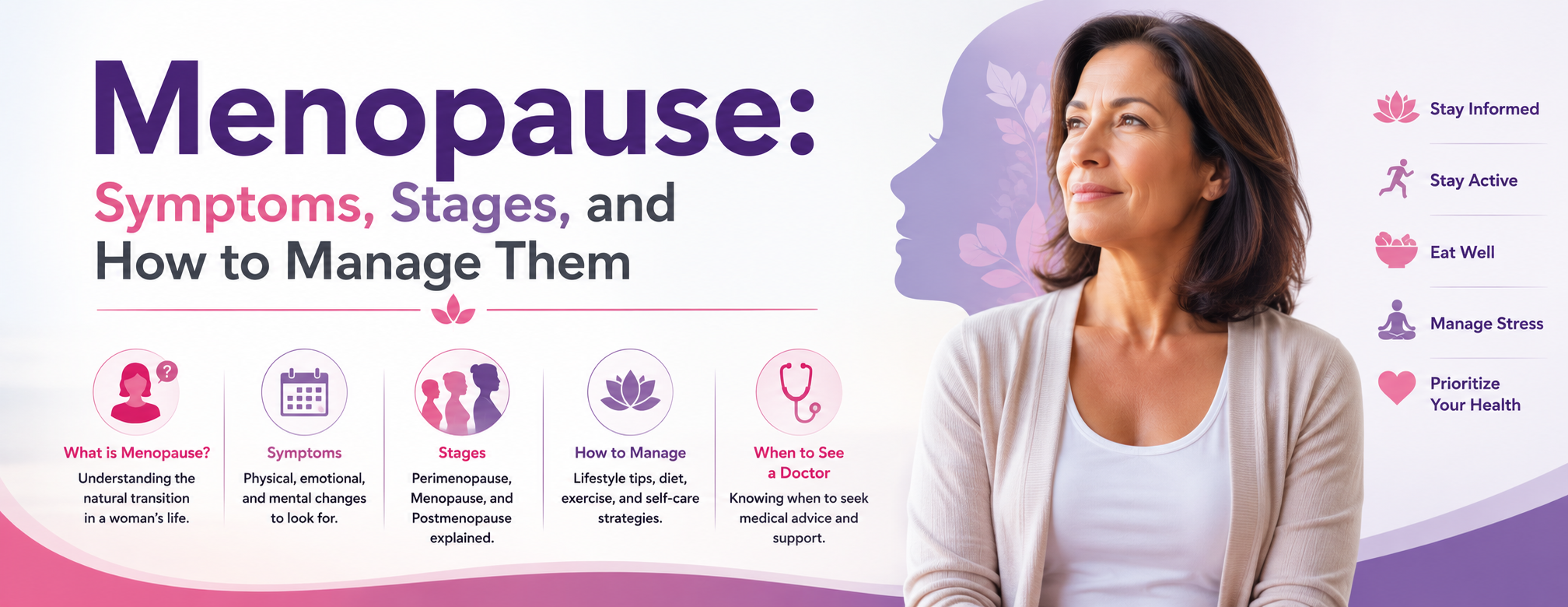
In this guide, we explain what menopause is, its symptoms, its three key stages, and practical ways to manage them — along with when it is time to consult a specialist.
What Is Menopause?
Menopause is officially defined as the point when a woman has not had a menstrual period for twelve consecutive months. It usually occurs between the ages of 45 and 55, with the average age being around 50. It happens because the ovaries gradually produce less estrogen and progesterone — the hormones that regulate menstruation and fertility.
While menopause itself is a single point in time, the body goes through a longer transition before and after it. This is why women often experience symptoms for several years rather than overnight. Understanding the stages helps explain why symptoms appear, change, and eventually ease.
The Three Stages of Menopause
Menopause is best understood as a journey with three distinct phases:
- Perimenopause: This is the transitional phase leading up to menopause, often starting in a woman’s 40s (sometimes earlier). Hormone levels fluctuate, causing irregular periods, hot flashes, and mood swings. Perimenopause can last anywhere from a few months to several years. Importantly, pregnancy is still possible during this stage, so contraception may still be needed.
- Menopause: This stage is reached once twelve months have passed without a period. At this point, the ovaries have stopped releasing eggs and estrogen levels are low. Symptoms such as hot flashes, sleep disturbances, and vaginal dryness are often most noticeable around this time.
- Postmenopause: This refers to all the years after menopause. Many symptoms gradually ease, but lower estrogen levels increase the long-term risk of conditions such as osteoporosis (weak bones) and heart disease. Regular health checks become especially important during this phase.
Common Symptoms of Menopause
Every woman’s experience is different, but the most common symptoms include:
- Hot flashes and night sweats — sudden waves of heat, often with sweating and flushing.
- Irregular periods — cycles that become longer, shorter, heavier, or lighter before stopping. Persistent heavy menstrual bleeding should always be evaluated by a doctor.
- Sleep problems — difficulty falling or staying asleep, often worsened by night sweats.
- Mood changes — irritability, anxiety, or low mood linked to hormonal shifts.
- Vaginal dryness and discomfort — which can affect intimacy and cause irritation.
- Reduced bone density — increasing the risk of fractures over time.
- Weight changes and slower metabolism — often around the abdomen.
- Difficulty concentrating or “brain fog” — trouble with memory and focus.
Symptoms can range from mild to severe. While some women experience few problems, others find that menopause significantly affects their quality of life — which is when professional support makes a real difference.
How to Manage Menopause Symptoms
Menopause cannot be prevented, but its symptoms can be managed effectively. A combination of lifestyle adjustments and medical care usually works best.
Lifestyle measures:
- Eat a balanced diet rich in calcium and vitamin D to protect bone health.
- Stay physically active with regular walking, strength training, or yoga.
- Limit caffeine, alcohol, and spicy foods, which can trigger hot flashes.
- Practise stress management through breathing exercises, meditation, or counselling.
- Maintain a cool sleeping environment to reduce night sweats.
Medical options:
- Hormone Replacement Therapy (HRT) to relieve moderate to severe symptoms, when appropriate.
- Non-hormonal medications for hot flashes, mood, or sleep difficulties.
- Vaginal moisturisers or local estrogen for dryness and discomfort.
- Bone-density screening and supplements to lower the risk of osteoporosis.
Because every woman’s needs are different, treatment should always be personalised. A specialist can assess your symptoms, medical history, and risk factors before recommending the safest, most effective plan for you.
When Should You See a Gynaecologist?
It is wise to consult a specialist if symptoms disrupt your daily life, if you experience unusually heavy bleeding, bleeding after menopause, or if you simply want guidance on staying healthy through this transition. Early advice can prevent complications and make the journey far more comfortable.
Finding a trusted gynaecologist in Karachi ensures you receive accurate diagnosis and care tailored to your stage of menopause. Choosing a top gynaecologist at a trusted hospital like Memon Medical Institute Hospital means you benefit from experienced specialists and modern diagnostic facilities under one roof.
At Memon Medical Institute Hospital (MMI), the Obstetrics and Gynaecology department offers compassionate, expert care for women at every stage of life — from menstrual and pregnancy-related concerns to menopause management. Our experienced specialists combine clinical expertise with a patient-centred approach, helping you feel supported and informed throughout your care.
Frequently Asked Questions
At what age does menopause usually start?
Menopause most commonly occurs between the ages of 45 and 55, with around 50 being the average. Some women experience it earlier due to genetics, surgery, or certain medical treatments.
How long do menopause symptoms last?
Symptoms vary widely. Some women experience them for a year or two, while others have symptoms for several years. Perimenopausal symptoms can begin years before periods stop completely.
Is weight gain during menopause normal?
Yes. Hormonal changes and a slower metabolism can lead to weight gain, especially around the abdomen. A balanced diet and regular exercise help manage it.
Conclusion
Menopause is a natural part of ageing — not a condition to fear. By understanding its stages, recognising the symptoms, and adopting healthy habits, women can move through this transition with confidence and comfort. With timely medical support, even challenging symptoms can be managed effectively.